The morning of the installation dawned with the kind of pristine, cloudless sky that seemed like a personal blessing. Zane stood on their newly solid roof, feeling the first warmth of the sun on his face. “MashaAllah,” he whispered. “Today, we make a deal with you.” 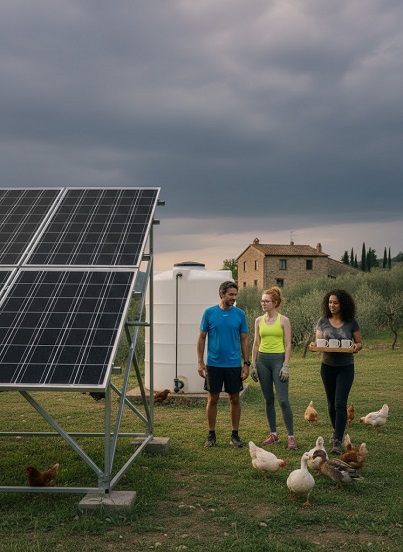
The peace was shattered by the grumble of Calogero’s van. Calogero, the solar installer recommended by Carmelo, was a man built like a barrel, with forearms tanned to leather and a permanent, philosophical grievance with the weather. He unloaded gleaming photovoltaic panels with the care of a bomb disposal expert, muttering under his breath.
“I nuvoli… sempre i nuvoli. The clouds… always the clouds,” he announced to no one in particular, glaring at the perfectly empty sky as if accusing it of deception.
Zane grinned. “We will forgive the clouds, Calogero. Today, they are not here.”
Calogero snorted. “Today, yes. Tomorrow? Who knows. They are Sicilian too. Unreliable.”
Lilly, carrying a clipboard with their carefully calculated load sheet, rolled her eyes with a smile. This was the poetry of their new life: a man who hated clouds, installing panels to capture the sun.
Carmelo arrived next, his toolbelt a symphony of clanks. He took one look at Zane holding a panel and Calogero holding a wrench and immediately assumed command. “Basta! Stop! Panels on roof first. Mounting. Securing. Then we talk wires. Poi cables. Sequence! Or we have… casino.” He made an explosive gesture with his hands. Chaos.
The ballet began. Giuse helped build the sturdy metal frame (struttura portante) on the roof. Calogero and Zane mounted the panels, Calogero cursing gently at each bolt. Lilly ran between the roof and the soon-to-be utility room, shouting measurements.
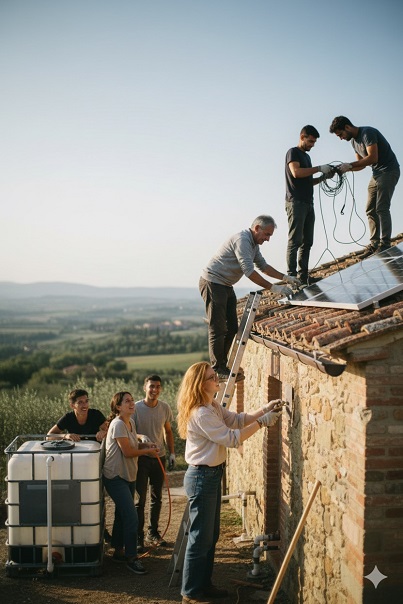 At one point, Zane, eager to help, connected a set of wires from a panel to the charge controller. There was a sharp POP, a flash of spark, and the distinct smell of melted plastic. Everyone froze.
“VEDI?! SEE?!” Calogero bellowed, waving his arms at the sky. “I told you! Clouds are better than mistakes! Clouds just sit there! Mistakes… they burn!”
Lilly had jumped a foot in the air. Zane looked mortified. Carmelo just shook his head, walked over, and in two efficient motions, disconnected and reconnected the wires correctly. “Positive. Negative. Not difficult. Like man, woman. Different. Don’t mix them up.”
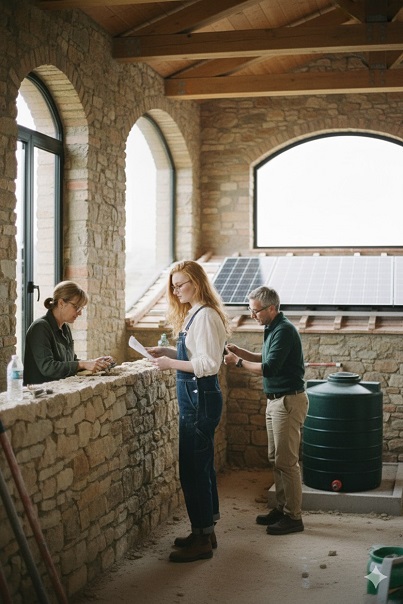
By late afternoon, the chaos had coalesced into order. The panels were a silent, blue-black array on the roof. Inside, the lithium-ion battery bank hummed contentedly in its ventilated cabinet. The inverter’s digital display glowed a friendly green.
Carmelo nodded at Lilly. “Accendi. Switch on.”
She took a breath and flipped the main breaker for the house circuit.
A small LED lamp they had plugged in as a test flickered, then shone with a steady, unwavering light. A moment later, the water pump in the well house kicked on with a healthy thrum-thrum-thrum, sending water rushing into their new storage tank. The drip irrigation lines Zane had laid in the vegetable garden began to weep precious droplets onto the soil.
In the kitchen—a room with only a sink and a single counter so far—Lilly did a spontaneous, silent little dance of triumph. Zane caught her hands and spun her around, both of them laughing in the electric light of their own making.
“MashaAllah,” Zane said, his voice thick with emotion. “The Sun also rises… this is our sun. Our water.”
The house, the land, and the elements were no longer just a location. They had become active, harnessed allies.
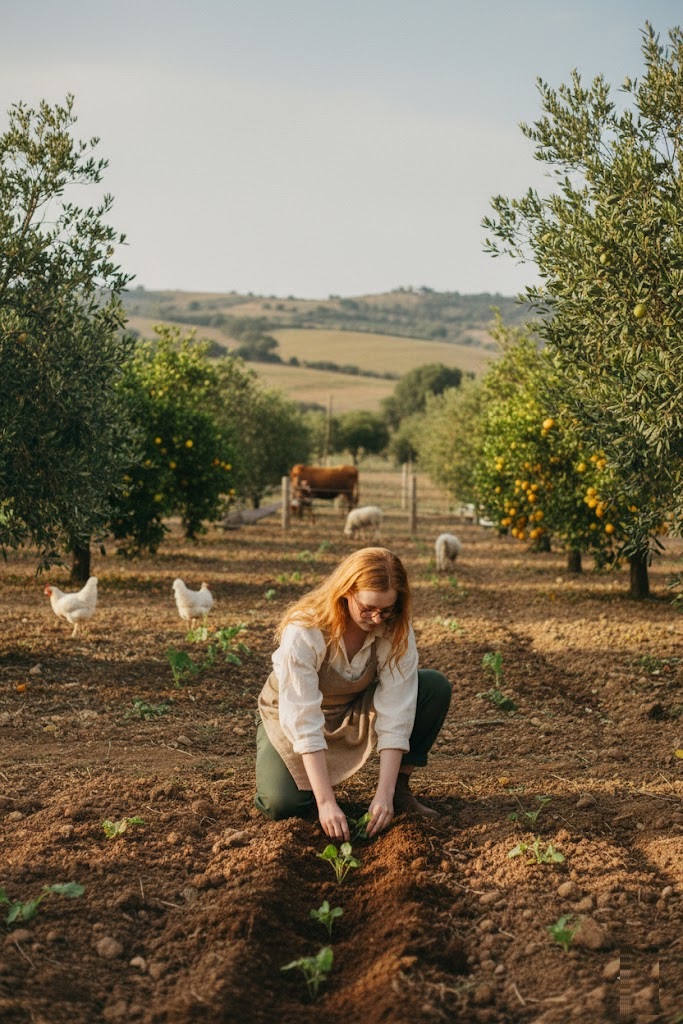
Energy freedom is the cornerstone of off-grid life. It’s not magic—it’s physics, planning, and a little poetry. Here’s how to capture the sun and the rain.
1. Solar Power: Sizing Your Personal Power Plant
An off-grid system is a closed loop. You must generate what you use. The core components are:
Solar Panels: Capture sunlight (DC electricity).
Charge Controller: The brain, regulating flow to batteries, preventing overcharge.
Battery Bank: Your energy savings account for nights and cloudy days.
Inverter: The translator, converting battery DC into the AC electricity your appliances use.
The Critical Calculation:
You must calculate your daily load in kilowatt-hours (kWh). List every appliance (fridge, lights, pump, laptop) and its wattage and hours of use.
Daily Load (kWh) × Autonomy Days ÷ Average Sicilian Sun Hours (5-6) = Minimum Panel Size (kW)
Autonomy Days: How many sunless days do you want to cover? (3 is a robust starting point).
Example: If you use 5kWh/day and want 3 days of autonomy: 5kWh x 3 days / 5 sun hours = 3kW of panels minimum.
2. The Heart of the System: Battery Storage
Choosing batteries is choosing your lifestyle’s resilience.
Lead-Acid: Cheaper upfront, but heavier, require maintenance, and have a shorter lifespan. Fine for a weekend cabin.
Lithium-Ion: The modern standard for homesteads. Lighter, maintenance-free, longer lifespan, deeper usable capacity. The clear choice for a primary home. DO NOT UNDERSIZE. Running out of power at 8 PM is the fastest way to hate your beautiful off-grid life.
3. Water: The True Liquid Gold
Your sources, in order of preference:
Rainwater Harvesting: From your roof into storage tanks (cisterne). A 100m² roof can collect ~50,000 liters per year in Sicily. Always filter before drinking.
Well (Pozzo): A game-changer. Drilling requires geological surveys and often municipal permission. A reliable well is worth the investment and paperwork.
Spring (Sorgente) or Stream: May require complex legal rights (concessione). Tread carefully.
Irrigation Intelligence: In arid Sicily, drip irrigation is not a luxury; it’s a survival tactic. It delivers water directly to roots, losing minimal amounts to evaporation. Gravity-fed systems (tank on a hill) are elegant and pump-free where terrain allows.
4. The Human Element: Working with Calogero & Carmelo
The Installer (Calogero): Knows optimal panel tilt (about 35° in Sicily), shading issues, and mounting for the maestrale wind. His cloud complaints are a signature; his work is solid.
The Electrician (Carmelo): Ensures the high-current DC from the panels and batteries is wired safely to code, preventing the “sparks” of excitement. He integrates the inverter with your home’s AC circuit panel.
The Golden Rule of Coordination: The sequence is sacred:
Structure Ready (Roof/ground frame built).
Panels Mounted & Wired (Calogero’s domain).
Battery & Inverter Setup (Carmelo and Calogero collaborate).
Load Connected & Tested (The grand finale).
              ↓ (DC Wires)
      [Charge Controller]
              ↓
      [Battery Bank] ← Your Energy Reservoir
              ↓
      [Inverter] → [Main AC Distribution Panel] → [Lights, Sockets, Pump]
              ↑
      [Backup Generator Input] (Optional for peace of mind)

      [Water Source: Roof/Rain/Well]
              ↓
      [Filtration System]
              ↓
      [Storage Tank (Elevated if possible)]
              ↓
      [Pressure Pump] → [House Pipes & Drip Irrigation Lines]
☐ Calculate your real Daily Load. Be honest about fridge size, tool usage, and that occasional power tool.
☐ Choose your battery chemistry and size based on your autonomy days and winter sun. Favor lithium.
☐ Secure your water source legally before drilling or diverting. The comune and geometra are involved.
☐ Schedule your trades in sequence. Calogero can’t wire panels that aren’t mounted. Carmelo can’t connect an inverter that isn’t there.
Which component of an off-grid solar system is responsible for storing electricity for use at night or on cloudy days?
A. The Inverter
B. The Battery Bank ✅
C. The Solar Panels
D. The Charge Controller
Why is drip irrigation highly recommended for an off-grid homestead in Sicily?
A. It is the most aesthetically pleasing system.
B. It dramatically reduces water waste by delivering it slowly to plant roots, which is critical in a dry climate. ✅
C. It floods fields faster for rice cultivation.
D. It requires no planning or installation.
What is the logical, safe sequence for installing a solar system?
A. Run all house wiring first, then mount panels, then hook up batteries.
B. Mount panels and run DC wires first, then install batteries and inverter, then connect to house AC system. ✅
C. Install the battery bank first, then panels, then do all the wiring.
D. Any order is fine as long as it’s done by a professional.
To go to the next lesson, click Next.